| Brain Stem Gliomas in Childhood |
|
|
|
| Written by Paul G. FIsher, M.D., pediatric neurologist & Dana R. Foer, PA-C | ||||||||||||||||||
|
by Dana R. Foer, PA-C and Paul Graham Fisher, M.D., MHS
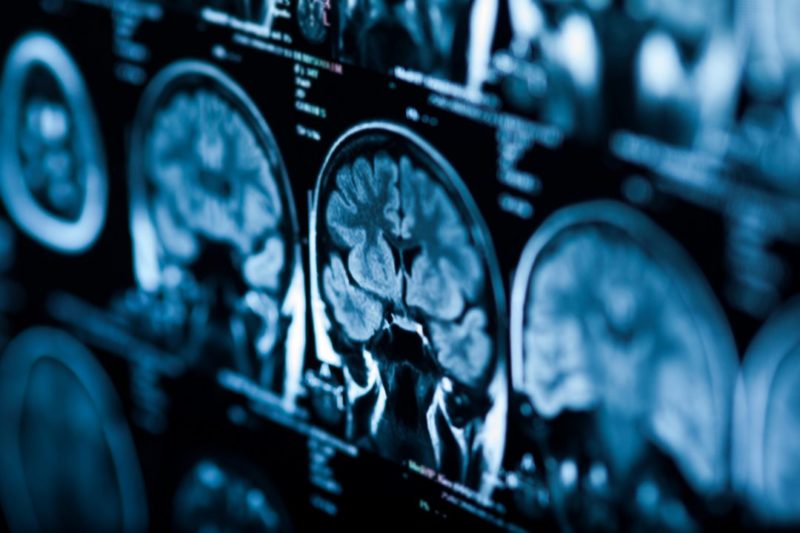
Brain stem tumors are perhaps the most dreaded cancers in pediatric oncology, owing to their historically poor prognosis, yet they remain an area of intense research. Brain stem tumors account for about 10 to 15% of childhood brain tumors. Peak incidence for these tumors occurs around age 6 to 9 years. The term brain stem glioma is often used interchangeably with brain stem tumor. More precisely, glioma encompasses tumor pathology types such as ganglioglioma, pilocytic astrocytoma, fibrillary astrocytoma, anaplastic astrocytoma, and glioblastoma multiforme. Rarely, other tumor pathologies such as atypical teratoid/rhabdoid tumor, primitive neuroectodermal tumor (PNET)/embryonal tumor, and hemangioblastoma occur at the brain stem. These entities are quite different from brain stem gliomas, and the following comments do not apply. Classification: Brain stem gliomas have been grouped in the past according to their pathology and location within the brain stem. Terms found in the medical literature include diffuse intrinsic gliomas, midbrain tumors, tectal gliomas, pencil gliomas, dorsal exophytic brain stem tumors, cervicomedullary tumors, focal gliomas, and cystic tumors. A simpler way to classify these tumors is by two categories: diffusely infiltrative brain stem glioma and focal brain stem glioma. Diffusely infiltrative brain stem gliomas insinuate diffusely throughout the normal structures of the pons (the middle portion of the brain stem), sometimes spreading to the midbrain (the upper portion of the brain stem) or the medulla (the bottom portion of the brain stem). The term diffuse intrinsic glioma is synonymous. By pathology, these tumors are most often a fibrillary astrocytoma (World Health Organization [WHO] grade II) or its higher-grade counterparts, anaplastic astrocytoma (WHO III) and glioblastoma multiforme (WHO IV). Focal brain stem gliomas--perhaps 20% or more of brain stem gliomas--include tumors that are more circumscribed, focal, or contained at the brain stem. These tumors may have cysts or grow out from the brain stem (i.e., exophytic). These tumors more often arise in the midbrain or medulla, rather than the pons. Pathology for these tumors is frequently pilocytic astrocytoma (WHO I) or ganglioglioma (WHO I), although rarely fibrillary astrocytoma (WHO II). Symptoms: Children with diffusely infiltrative brain stem gliomas present with ataxia (clumsiness or wobbliness), weakness of a leg and/or arm, double vision, and sometimes headaches, vomiting, tilting of the head, or facial weakness. Double vision (diplopia) is the most common presenting symptom for these tumors. Symptoms are usually present for 6 months or less at time of diagnosis. Patients with focal brain stem gliomas may display some of the same symptoms, although not the usual combination of ataxia, weakness, and double vision. Duration of symptoms is usually greater than 6 months before the tumor is diagnosed. Patients with focal brain stem gliomas may display some of the same symptoms, although not the usual combination of ataxia, weakness, and double vision. Duration of symptoms is usually greater than 6 months before the tumor is diagnosed. Diagnosis: Throughout the United States, brain magnetic resonance imaging (MRI), with and without gadolinium contrast, has become the "gold standard" for diagnosis of brain stem gliomas. Biopsy is almost never indicated for the diffusely infiltrative glioma involving the pons, unless the diagnosis of this tumor is in doubt. Biopsy may be indicated for brain stem tumors that are focal or atypical, especially when the tumor is progressive or when surgical excision may be possible. Spread of either of these tumors (metastases) outside the brain stem to other sites in the brain or spine is unusual. Thus, staging tests to look for tumor spread, such as spine MRI or lumbar puncture (spinal tap), are not routinely performed at diagnosis. Treatment: Since brain stem gliomas are relatively uncommon and require complex management, children with such tumors deserve evaluation in a comprehensive cancer center where the coordinated services of dedicated pediatric neurosurgeons, pediatric neurologists, pediatric oncologists, radiation oncologists, neuropathologists, and neuroradiologists are available. In particular, for diffusely infiltrative brain stem gliomas, because of their rarity and poor prognosis, children and their families should be encouraged to participate in clinical trials attempting to improve survival with innovative therapy. Neurosurgery: Surgery is usually not possible or advisable for diffusely infiltrative brain stem gliomas. By their very nature, these tumors invade diffusely throughout the brain stem, growing between normal nerve cells. Aggressive surgery would cause severe damage to neural structures vital for arm and leg movement, eye movement, swallowing, breathing, and even consciousness. Surgery with less than total removal can be performed for many focal brain stem gliomas. Such surgery often results in quality long-term survival, without administering chemotherapy or radiotherapy immediately after surgery, even when a child has residual tumor. Surgery is particularly useful for tumors that grow out (exophytic) from the brain stem. Focal brain stem tumors that arise at the back of the midbrain (tectal gliomas) should be managed conservatively, without surgical removal. Nevertheless, shunt placement or ventriculostomy for hydrocephalus (see below) is frequently necessary. These tumors have been described to be stable for many years without any intervention other than shunting. Radiotherapy: Radiotherapy limited to the involved area of tumor is the mainstay of treatment for diffusely infiltrative brain stem gliomas. A total radiation dosage ranging from 5400 to 6000cGy, administered in daily fractions of 150 to 200 cGy over 6 weeks, is standard. Hyperfractionated (twice-daily) radiotherapy was used previously to deliver higher irradiation dosages, but such did not lead to improved survival. Hyperfractionated radiotherapy has been associated with a greater dependency on steroids (see below). Chemotherapy and other drug therapies: The role of chemotherapy in diffusely infiltrative brain stem gliomas remains unclear. Studies to date with chemotherapy have shown little improvement in survival, although efforts through the Children's Oncology Group (COG) and Pediatric Brain Tumor Consortium (PBTC) are underway to explore further the use of chemotherapy and other drugs. Drugs utilized to increase the effect of radiotherapy (radiosensitizers) have thus far shown no added benefit, but promising new agents are under investigation. Immunotherapy with beta-interferon and other drugs to modify biologic response have shown disappointing results. Intensive or high-dose chemotherapy with autologous bone marrow transplant or peripheral blood stem cell rescue has not demonstrated any effectiveness in brain stem gliomas and is not recommended. Future clinical trials may incorporate medicines to inhibit blood vessel growth (anti-angiogenesis agents) or drugs that interfere with cellular pathways (signal transfer inhibitors).
National clinical trials for newly diagnosed diffusely infiltrative brain stem gliomas
Recurrent or Progressive Brain Stem Gliomas: Regrettably, diffusely infiltrative brain stem gliomas have a high rate of recurrence or progression. At relapse, a variety of Phase I and Phase II drug trials are available through the national research consortiums COG and PBTC, as well as through individual pediatric institutions. Oral etoposide, temozolomide, thalidomide, and tamoxifen are drug options sometimes utilized outside a study. Prognosis: Diffusely infiltrative brain stem gliomas often follow an inexorable course of progression, despite therapy. A large majority of children die within a year of diagnosis. Focal brain stem glioma, however, can carry an exceptional prognosis, with long-term survivals frequently reported. Other Management Issues: Shunts: Less than half of children with brain stem tumors will develop obstructive hydrocephalus, requiring a shunt or ventriculostomy, at some time during the course of their illness. Shunts are simple mechanical tubing devices which divert cerebrospinal fluid trapped in the brain's ventricles above the tumor to another location in the body, typically the abdomen (peritoneum), as in a ventriculoperitoneal shunt. A ventriculostomy is the surgical creation of an internal channel, often from the third ventricle to a lower portion of the brain, to allow cerebrospinal fluid to drain beyond the tumor. Steroids: Dexamethasone (trade name Decadron) is a steroid drug frequently administered to brain stem tumor patients for the swelling and "tightness" of their tumor at the base of their skull. Dexamethasone must be used sparingly! Dexamethasone should never be prescribed prophylactically or "just in case." That is, this steroid is an extremely effective medicine for symptomatic swelling associated with treatment of a brain stem glioma, particularly with radiotherapy. However, dexamethasone is not necessary unless a child has symptomatic swelling. Dexamethasone has a number of side effects which include mood changes, weight gain, fluid retention, glucose instability, high blood pressure, and increased susceptibility to infection. References: Fisher PG, Breiter SN, Carson BS, Wharam MD, Williams JA, Weingart JD, Foer DR, Goldthwaite PT, Burger PC. A clinicopathologic reappraisal of brainstem tumor classification: identification of pilocytic astrocytoma and fibrillary astrocytoma as distinct entities. Cancer 89:1569-1576, 2000. Fisher PG, Donaldson SS. Hyperfractionated radiotherapy in the management of diffuse intrinsic brainstem tumors: when is enough? Int J Radiat Oncol Biol Phys 43:947-949, 1999. Strother DR, Fisher PG, Woo S, Pollock I, Hunter J, Pomeroy S, Rorke LB. Tumors of the Central Nervous System. In Pizzo PA, Poplack DG, eds. Principles and Practice of Pediatric Oncology, 4th ed. Philadelphia: Lippincott-Raven Publishers, 2001. Paul Graham Fisher, M.D., MHS, is Assistant Professor of Neurology and Pediatrics, the Stanford University School of Medicine, and Director of the Pediatric Neuro-Oncology Clinic at Lucile Salter Packard Children's Hospital at Stanford. Dr. Fisher voluntarily serves as a member of the Childhood Brain Tumor Foundation's Scientific/ Medical Advisory. This article was written for the Childhood Brain Tumor Foundation, Germantown, Maryland, www.childhoodbraintumor.org. |